
One of the most common misconceptions in skincare is thinking oily skin means your skin is hydrated, or that you have to completely dry it out to control shine. In reality, oily and dehydrated skin are not the same thing, and many people actually have both at the same time.
Understanding the difference is the key to balancing your skin, managing breakouts, and achieving that healthy, hydrated glow.
Oily Skin vs. Dehydrated Skin: The Basics
Let’s start with the core difference:
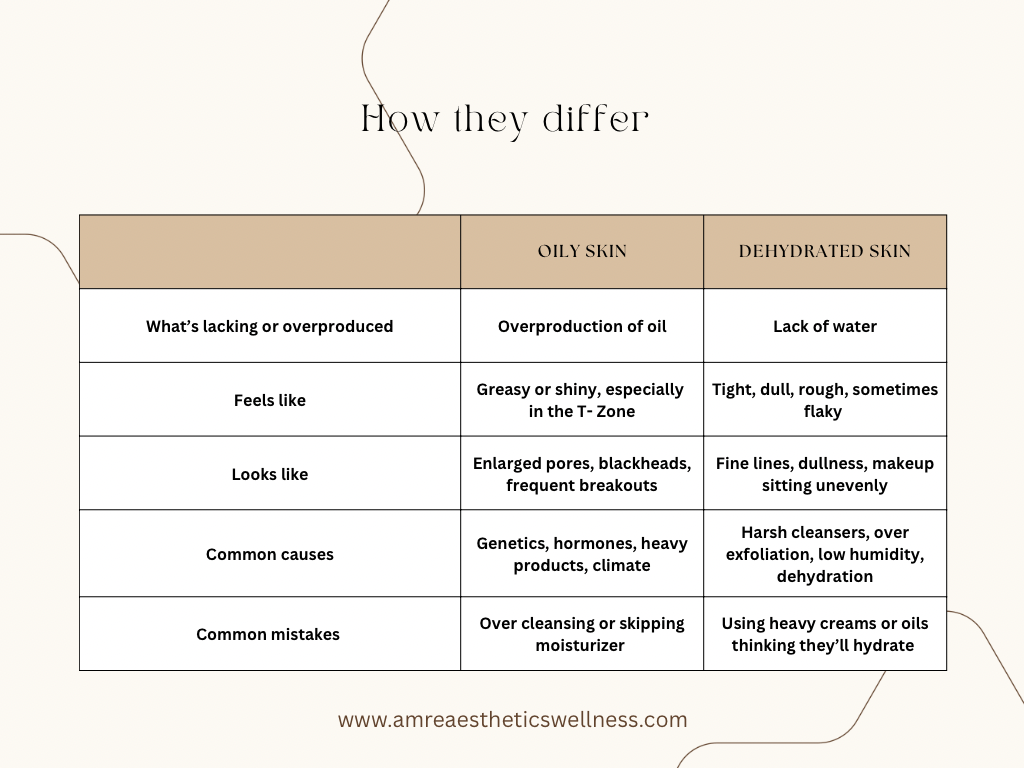
- Oily skin refers to having too much oil (sebum).
- Dehydrated skin refers to having not enough water.
You can have oily skin that’s dehydrated. In fact, it’s one of the most common skin concerns professionals see in-clinic.
How to Tell Which One You Have
Here’s how to figure it out:
- Your skin looks shiny within a few hours of washing
- You often deal with blackheads or clogged pores
- Your makeup doesn’t last throughout the day
You rarely feel tightness or dryness
You likely have dehydrated skin if:
- Your skin feels tight, even though it looks oily
- Makeup creases or looks patchy
- You notice fine lines or flakiness
- Your skin feels rough or looks dull
- You’ve been using a lot of exfoliants or acne treatments lately
Pro tip: If your skin feels oily and tight at the same time you’re probably dehydrated and overproducing oil to compensate.
How to Care for Oily Skin
Oily skin thrives when it’s balanced, not stripped. The goal is to control excess sebum while maintaining a healthy barrier.
- Cleanse gently but effectively: Use a gel or foaming cleanser with ingredients like mandelic acid to keep pores clear.
- Tone lightly: Look for alcohol-free toners with niacinamide or green tea extract to balance oil.
- Moisturize daily: Yes oily skin needs moisturizer! Choose a lightweight, oil-free or gel-based formula with hyaluronic acid or ceramides.
- Exfoliate weekly: Use a gentle chemical exfoliant to prevent congestion.
- SPF always: Mineral sunscreens with zinc oxide help mattify and protect.
Star ingredients for oily skin:
- Niacinamide
- Salicylic acid
- Mandelic acid
- Green tea extract
How to Care for Dehydrated Skin
Dehydrated skin needs to restore water and repair the barrier not necessarily add more oil.
- Cleanse gently: Avoid foaming or stripping cleansers; opt for a hydrating gel or cream cleanser.
- Layer hydration: Use a hyaluronic acid or glycerin serum before moisturizer to pull water into the skin.
- Seal it in: Use a moisturizer with ceramides, squalane, or peptides to lock in moisture.
- Avoid over-exfoliation: Too many acids or retinoids can make dehydration worse.
- Protect daily: Always use SPF dehydration worsens with UV exposure.
Star ingredients for dehydrated skin:
- Hyaluronic acid
- Glycerin
- Ceramides
- Squalane
- Aloe vera
Can You Be Both Oily and Dehydrated?
Yes, and it’s extremely common! Many people with acne or oily skin over cleanse or over exfoliate, which strips the skin of water and triggers rebound oil production.
The key is hydrating while balancing oil:
- Use a gentle acid (like mandelic acid) to keep pores clear
- Add a hydrating serum to restore water balance
- Choose a lightweight, non-comedogenic moisturizer
- Avoid harsh, drying products or excessive scrubbing
When your skin is properly hydrated, it naturally regulates oil better meaning fewer breakouts and less shine.
The Bottom Line
Knowing whether your skin is oily, dehydrated, or both helps you choose products that support your skin not fight it.
- Oily skin needs balance and oil control
- Dehydrated skin needs hydration and barrier repair
- Both need gentle care and consistent moisture
If you’re unsure which category you fall into, a professional skin consultation can help you identify what your skin actually needs and create a customized routine to restore balance and glow.
